Most people spray perfume and wonder why it vanishes by noon. The fix isn't spraying more, it's a handful of small habits that change how your skin holds scent. Follow these steps and a good fragrance can stay with you all day.
Step 1: Apply to Pulse Points, Not Clothes
Pulse points are the spots on your body where blood vessels sit close to the skin. The skin there is slightly warmer, and that warmth pushes fragrance molecules into the air around you. The most reliable ones: the inner wrists, the sides of the neck, the inside of the elbows, and behind the knees.
Here's something most guides miss — the back of the neck is actually one of the best spots. As you move through the day, a mist there creates a soft scent trail behind you. It also avoids nose-blindness, which happens when a scent is right under your nose and your brain starts filtering it out within an hour.
Spray from about 15 cm away. Hold the bottle there, press once or twice, and let the mist fall naturally. Don't press the nozzle right against your skin — that deposits too much in one spot and can feel sharp and one-dimensional rather than rounded and full.
What about clothes? Fabric does hold scent longer than skin in most cases, because the fibers slow evaporation. But there's a real trade-off: perfume on fabric doesn't warm up the same way, so the scent develops differently. Alcohol can also stain lighter fabrics, especially silks and linens. If you want to spray on clothing, a scarf or the inside collar of a jacket is a safer bet than anything light-colored or delicate. For day-to-day wear, pulse points on skin give you better projection and a truer scent experience. If you want to explore long-lasting options built for all-day wear, the best affordable perfumes for men with strong projection are a solid starting point.
By now you should have picked two or three pulse point spots that work for your routine. That's all you need — more spots doesn't always mean more longevity, it just means more product used.
Step 2: Moisturize Before You Spray
Dry skin doesn't hold scent. The outermost layer of skin, the stratum corneum, releases fragrance molecules faster when it's dehydrated. Hydrated skin holds scent noticeably longer than dry skin — a significant gap for one simple habit.
The key is using the right kind of moisturizer. Humectant-based formulas, ones with glycerin or hyaluronic acid, are what you want. They draw water into the skin's surface layers and create micro-reservoirs where fragrance molecules can slow down instead of evaporating immediately. Occlusive-heavy creams (think thick petrolatum or mineral oil) can actually block the skin's natural process and cause the scent to "pop" intensely for 20 minutes and then disappear. Fragrance-free is also important: a scented moisturizer will compete with your perfume and collapse the scent's natural progression from top notes down to base notes.
Timing matters too. Apply your moisturizer about five minutes before you spray. That window lets the humectants absorb and reach peak surface hydration. Too soon and unabsorbed product dilutes the perfume; too late and the skin is already drying back down.
The stratum corneum is a dynamic barrier whose water content directly affects how quickly substances move through and off it, which is exactly why a hydrated surface slows fragrance evaporation rather than just "trapping" it like glue.
One usable option if you're short on time: unscented body oil applied lightly works the same way. Press a few drops onto your wrists and neck, wait, then spray. The oil layer gives fragrance molecules something to cling to. This is especially useful in winter or in heated rooms, where indoor air drops below 30% relative humidity and skin loses moisture three times faster than normal.
Pro Tip: Keep a small, fragrance-free glycerin lotion near your perfume as a daily reminder. Apply it first, wait while you finish getting dressed, then spray. That five-minute gap happens naturally without having to think about it.
Step 3: Don't Rub — Let It Dry Naturally
Rubbing your wrists together after spraying is one of the most common perfume mistakes. It feels natural — like you're spreading the scent — but what you're actually doing is generating friction heat that crushes the volatile top notes before they have a chance to develop.
A fragrance is structured in layers. Top notes hit first — usually bright, citrus, or green — and they're the most fragile. They evaporate quickly by design, meant to make a first impression before the warmer middle and base notes settle in. Rubbing accelerates that evaporation dramatically. You lose the top notes in minutes instead of letting them fade naturally over 15 to 30 minutes, and the scent ends up smelling flat and one-dimensional because the pyramid gets skipped.
The fix is simple: spray, then keep your wrists apart and let the perfume dry on its own. If you applied to your neck, don't touch it. If you want to press the scent lightly against a pulse point with a fingertip — say, to warm the area slightly — use the gentlest press-and-hold rather than a rub. The goal is to let the fragrance do its own work.
This one habit alone can add noticeable time to how long a scent lasts. It also changes how the fragrance smells — in a good way. You get the full progression from the opening spray through the dry-down, which is often the best part of any well-made perfume. If you're curious what that full progression looks like on a long-lasting inspired fragrance, the best Sauvage-inspired scents at 40% essence concentration are a good example of a well-developed scent pyramid.
Key Takeaway: Let perfume dry naturally after spraying — rubbing destroys top notes and shortens wear time by an hour or more.
Step 4: Start With a Higher Concentration
The single biggest factor in how long a perfume lasts is oil concentration. The more fragrance oil in the formula, the slower it evaporates, and the longer you smell it. This isn't marketing — it's basic chemistry. Higher oil load means more molecules on your skin over a longer period.
Here's how the common concentration tiers compare:
| Concentration Type | Fragrance Oil % | Typical Wear Time | Best For |
|---|---|---|---|
| Eau de Cologne (EDC) | 2–5% | 2–3 hours | Quick freshness, hot weather |
| Eau de Toilette (EDT) | 5–15% | 3–5 hours | Office, casual daytime |
| Eau de Parfum (EDP) | 15–20% | 5–8 hours | Everyday wear, evenings |
| Extrait de Parfum | 20–40%+ | 8–12+ hours | All-day wear, special occasions |
| Alcohol-free oil perfume | Varies (often high) | 6–10 hours | Sensitive skin, travel, close-skin scent |
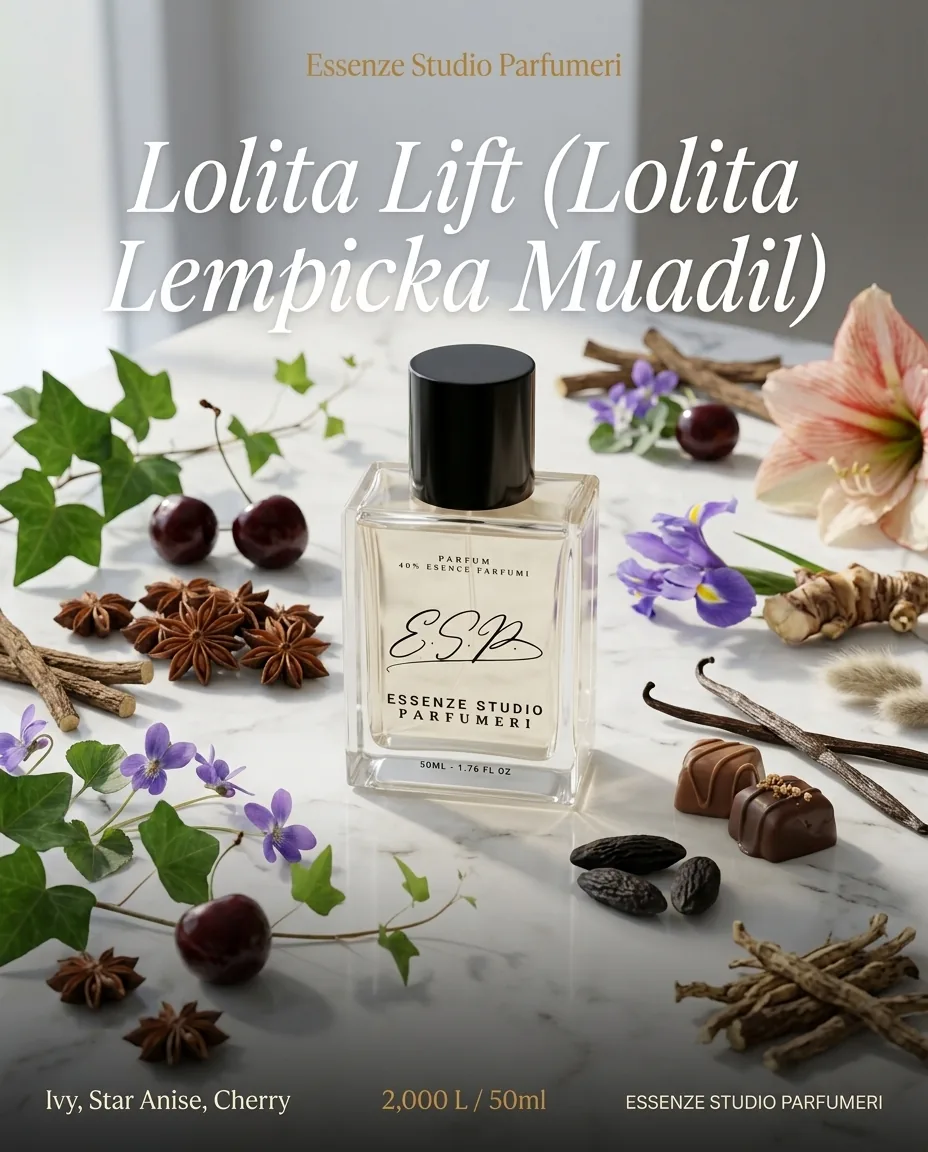
At Essenze Studio Parfumeri, every spray in the collection is formulated at 40% essence concentration, Extrait de Parfum level. That's significantly higher than most commercial EDTs and even many designer EDPs. The higher oil load means more fragrance molecules bind to your skin on each spray, which is why customers across Tirana, Prishtina, and beyond report full-day wear without needing to reapply mid-afternoon.
One important point: with a 40% extrait, you use less. One or two sprays to pulse points is enough. Over-applying a high-concentration formula doesn't extend wear further — it just increases intensity to a level that can become overpowering in a closed space. Start with one spray, see how it projects for the first hour, then add a second if needed. The full Essenze Studio catalog of 203 inspired scents includes 10ml trial sizes, so you can test the projection of any scent before committing to a 30ml or 50ml bottle.
The alcohol-free oil format is worth mentioning separately. Because there's no alcohol to accelerate initial evaporation, oils release more slowly and tend to stay closer to the skin. They're ideal for sensitive skin, for anyone who runs warm and finds sprays too sharp at first, and for travel. The trade-off is projection — oils are more of a personal scent, something someone notices when they're close to you, rather than filling a room.
Step 5: Layer Your Scent for Staying Power
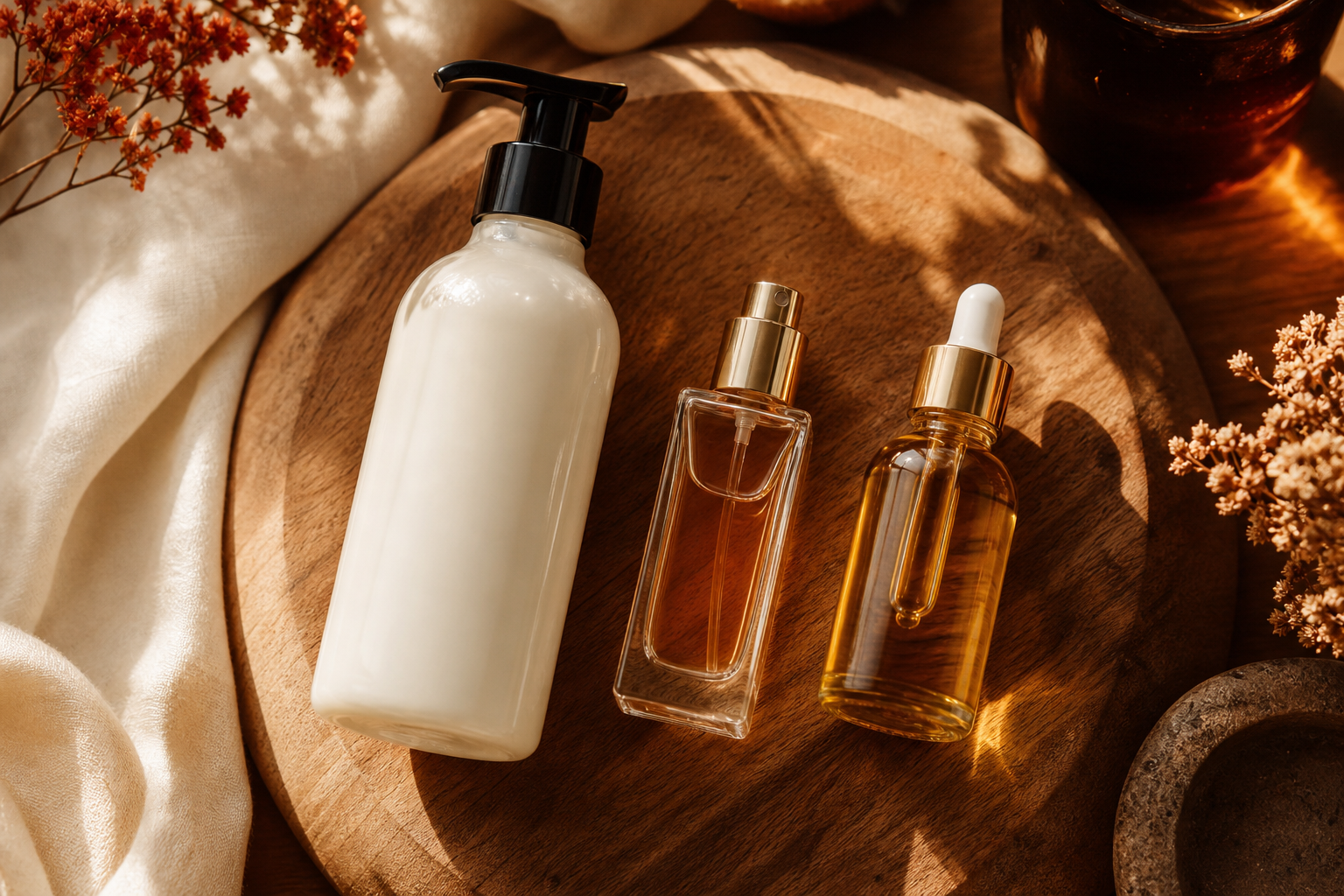
Layering doesn't mean stacking multiple perfumes. It means building a base that holds your chosen scent for longer. The method is straightforward: moisturized skin first (Step 2), then the fragrance on top.
A more deliberate version of layering uses an unscented body oil as a middle step. Apply a thin layer of something like squalane or a basic jojoba oil to your pulse points, let it absorb for a minute, then spray your perfume on top. The oil gives the fragrance molecules a surface to anchor to rather than evaporating off bare skin. This is especially useful for people with naturally dry skin or anyone in a dry climate where standard moisturizer absorbs too fast.
Some people also layer two versions of the same scent family — an oil base with a spray on top. At Essenze Studio Parfumeri, we offer both oil and spray formats across many scent families specifically for this reason. The oil sits close to the skin and holds all day; the spray opens with stronger projection and evolves more visibly. Together, you get both longevity and presence.
What you want to avoid is layering competing scents. A heavily scented body wash followed by a different perfume results in two fragrance profiles fighting each other. The solution is either a fragrance-free wash or a wash that matches your scent family closely. Woody base on woody base, for example, deepens rather than clashes.
Hair also holds scent well — the porous structure of hair fibers absorbs fragrance effectively. But alcohol-based sprays can dry hair out over time. A light mist into the air above your head, walking through it, gives your hair a subtle hold without direct exposure to alcohol. Or use an oil-format perfume run through the ends. It's a small move that adds a noticeable trailing scent as you move.
Step 6: Store Your Fragrance the Right Way
A perfume that's stored badly degrades before it ever reaches your skin. Heat, light, and humidity are the main culprits. All three accelerate the oxidation of fragrance molecules, which changes how a scent smells and shortens both its shelf life and its on-skin performance.
The bathroom is the worst place to keep perfume. The temperature swings every time the shower runs, and steam introduces humidity directly into the air around the bottle. A bathroom cabinet feels convenient, but it quietly ruins your collection over months.
The right storage is simple: a dark drawer or shelf away from direct sunlight, at a stable room temperature. A cool spot, around 15–18°C, is ideal, but a room-temperature drawer is fine as long as it doesn't heat up from a nearby radiator or window. The key is consistency. Fragrance molecules are sensitive to temperature fluctuations, not just high heat.
Keep the bottle upright with the cap on. This minimizes air exposure inside the bottle. Once a perfume is opened, oxygen slowly interacts with the oil compounds, so you want to limit that exposure as much as possible. Many fragrance compounds are volatile organic molecules that react with oxygen and UV light over time, which is why most quality perfumes are sold in opaque or dark-tinted bottles.
If you use trial sizes — like the 10ml sprays or 3ml oils from Essenze Studio Parfumeri — storage is even simpler because you'll go through them faster. Small formats mean less oxidation risk. They're also easy to keep in a bag or drawer for a midday refresh when needed, without carrying a full bottle.
FAQ
Why does my perfume fade so fast?
Dry skin is the most common reason. Fragrance evaporates much faster off dehydrated skin than moisturized skin. The concentration of what you're wearing also matters significantly — an Eau de Toilette at 5–15% fragrance oil will always fade faster than an Extrait de Parfum at 20–40%. Storage in heat or humidity degrades the formula before you even apply it.
Where should you spray perfume to make it last longest?
Pulse points — inner wrists, sides of the neck, inside the elbows, and behind the knees — are the most effective spots because warmth there pushes scent into the air. The back of the neck is underrated: it creates a moving scent trail and reduces nose-blindness. Avoid rubbing after spraying, which destroys the top notes quickly.
Does higher perfume concentration actually make a difference?
Yes, meaningfully so. Eau de Toilette typically lasts 3–5 hours; Extrait de Parfum at 20–40% concentration can reach 8–12 hours on skin. The higher the fragrance oil percentage, the slower the evaporation. This is why a 40% essence concentration extrait, like those in the Essenze Studio Parfumeri range, out-lasts most commercial sprays without needing reapplication.
Can I make perfume last longer on clothes?
Fabric holds scent longer than skin because fibers slow evaporation — many people report 8 or more hours on a wool scarf or cotton collar. The trade-off is that alcohol can stain delicate fabrics, and the scent doesn't develop through a full top-to-base progression the way it does on warm skin. Stick to fabric spraying on dark or durable materials.
Does rubbing wrists together really ruin the scent?
Yes. Rubbing generates friction that accelerates evaporation of the volatile top notes, which are the most fragile part of a fragrance. You lose the opening phase in minutes instead of letting it develop naturally over 15–30 minutes. The fix is simple: spray and leave it alone. The difference in how a fragrance smells and how long it lasts is real.
How should I store perfume to keep it fresh?
Keep bottles in a cool, dark spot with a stable temperature — a drawer away from windows or radiators works well. Avoid the bathroom, where heat and humidity fluctuate with every shower. Keep caps on and bottles upright to minimize air exposure. Properly stored, a quality extrait can stay at full strength for three to five years.
Conclusion
The biggest gains come from two things: moisturizing before you spray, and using a high-concentration formula that doesn't evaporate off your skin by midday. Start with an unscented lotion, wait a few minutes, then apply your extrait to pulse points without rubbing. If you haven't tested a 40% essence concentration spray yet, the 10ml trial sizes at Essenze Studio Parfumeri are the lowest-risk way to find out what all-day fragrance actually feels like.