Yes, perfume does expire. The chemistry inside every bottle changes over time, and the scent you loved on day one won't last forever without the right care. The good news is that most fragrances stay true for years, sometimes decades, if you know what to watch for and how to store them properly.
Does Perfume Actually Expire?
Perfume is a complex liquid. It's a mix of ethanol, water, synthetic aroma chemicals, natural essential oils, and fixatives. All of those components react with each other over time, and with the environment around them.
The main driver of spoilage is oxidation. The moment you spray a bottle, air gets pulled back in. That oxygen reacts with fragrance molecules and starts breaking them down. Terpenes, which are the compounds that give citrus and green notes their brightness, are particularly vulnerable. Limonene, for example, a molecule found in bergamot and lemon, oxidizes into compounds that smell dull or camphor-like rather than clean and fresh.
Aldehydes, common in floral fragrances, break down too. Aldehydes can convert into acetals under heat stress, producing vinegary or metallic off-notes that are hard to miss once they appear.
Light makes things worse. UV rays break chemical bonds directly through a process called photo-oxidation. Top notes such as lemon, orange, and bergamot are most vulnerable to oxidation, leading to an off scent. Clear glass bottles offer almost no protection, since a significant portion of UVA rays can pass straight through them.
There's a counter-intuitive side to all this, though. Heavier base notes, things like amber, musk, patchouli, and oud, are structurally denser and resist oxidation better. Some can actually deepen with age. So not all fragrance families expire at the same rate, and that distinction matters when you're choosing a scent built for longevity.
How Long Does Perfume Last?
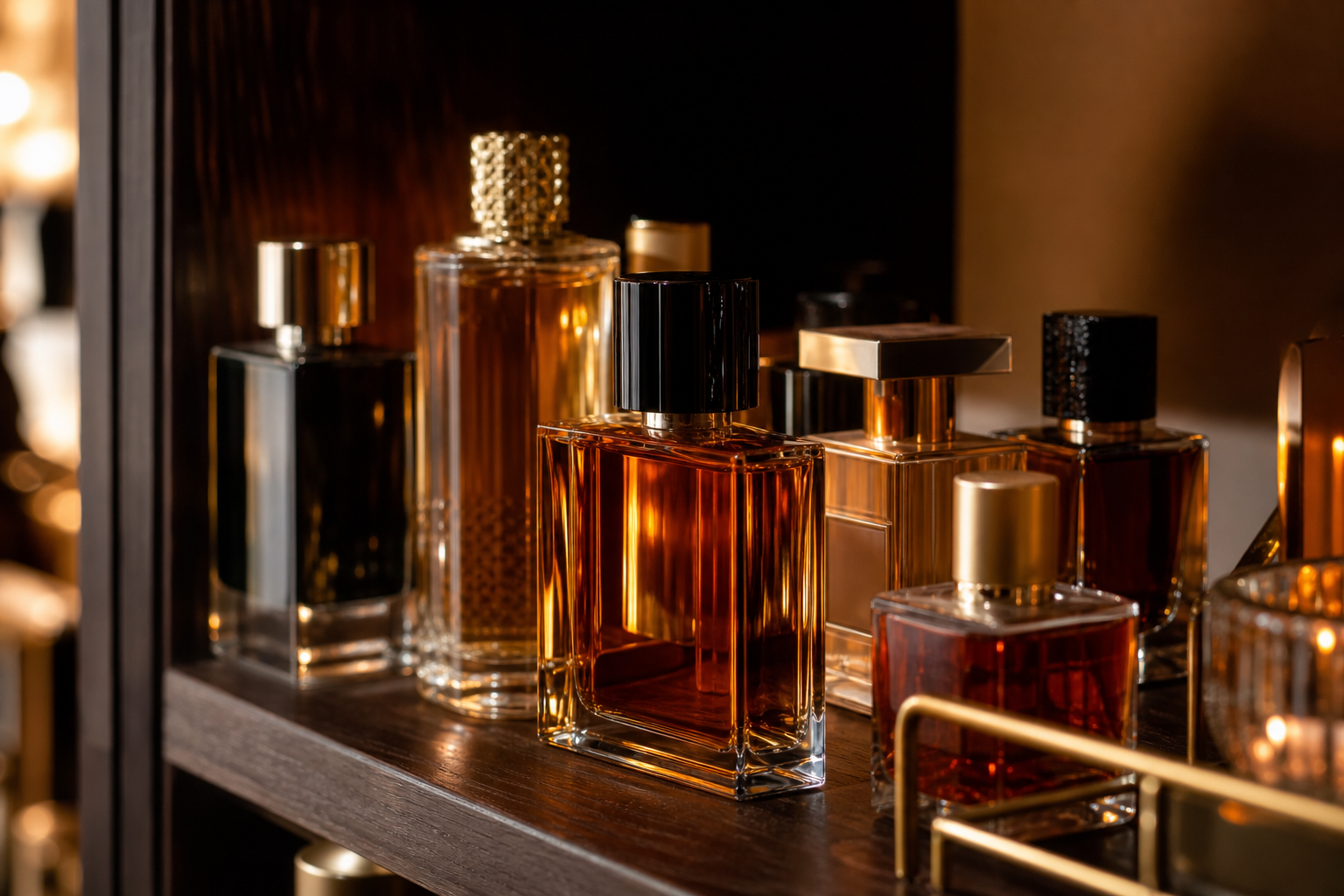
Shelf life data for fragrances is tricky to pin down because it varies so much by formulation and storage conditions. The commonly cited industry figure for an opened bottle is around 36 months. An unopened bottle, kept well, can last three to five years before any chemical drift becomes noticeable. But those are conservative baselines, not hard limits.
The real range is much wider, with well-stored fragrances often lasting well beyond those baselines. That wide range reflects how much the environment matters. A bottle sitting on a sunny bathroom shelf might turn in under a year. The same bottle in a cool, dark drawer could smell close to original a decade later.
The EU's Period After Opening (PAO) system, used on cosmetics packaging, gives a usable reference point. Products with a shelf life over 30 months display a small open jar symbol with a number, typically 24M or 36M, indicating months of recommended use after first opening. Most fine fragrances carry a 36M PAO. That's a minimum safety estimate, not an expiry cliff.
Concentration matters too. Higher essence concentration generally means the fragrance is more stable. A high-concentration Extrait de Parfum versus an EDT comparison shows that lighter Eau de Cologne and EDT formats, with their high alcohol-to-essence ratio and more volatile top notes, tend to drift faster than a dense extrait or an oil-based format where the aromatic compounds are more tightly bound.
| Fragrance Format | Typical Opened Shelf Life | Key Risk Factor | Longevity Outlook |
|---|---|---|---|
| Eau de Cologne (EDC) | 1–2 years | High citrus/floral top notes | Degrades fastest |
| Eau de Toilette (EDT) | 2–3 years | Light to moderate volatility | Moderate |
| Eau de Parfum (EDP) | 3–5 years | Balanced note pyramid | Good with proper storage |
| Extrait de Parfum (40%) | 5–10+ years | Dense base notes dominate | Very good |
| Alcohol-free oil perfume | Varies by oil type | Essential oils last longer than vegetable oils | Good to excellent |
At Essenze Studio Parfumeri, we formulate at 40% essence concentration, which sits firmly in the extrait range. That higher concentration, paired with our alcohol-free vajore options, means the aromatic compounds are more densely packed and less exposed to the oxidation cycle that eats away at lighter formats. For buyers in Tirana and Prishtina who want a scent that genuinely holds over time, that concentration level makes a real usable difference.
Signs Your Perfume Has Gone Off
Most people notice something is wrong before they can name it. The scent just smells off. But there are specific things to look for, and catching them early can save you from spraying a degraded formula on your skin.
Scent Changes
The clearest sign is a metallic or sour edge where there wasn't one before. This happens as aldehydes break down into acids and the top note structure collapses. Citrus notes, especially lemon, orange, and bergamot, are the first to go. If a fragrance that once opened with a bright citrus hit now smells flat or slightly vinegary in the first few seconds, oxidation is already well along. A sour or vinegary quality can develop as acidic byproducts build up in the liquid.
You might also notice the fragrance smells more concentrated than before. That's not a sign it got better. It usually means the alcohol has partially evaporated, leaving the heavier aromatic compounds behind in a distorted ratio. The dry-down changes too, often feeling stale rather than deepening naturally.
Visual Changes
A darkening liquid is one of the most reliable visual cues. Fragrances that start pale gold or clear can shift toward amber or brown as oxidation progresses. That said, some fragrance families, particularly heavy vanilla and jasmine formulas, darken naturally without spoiling. The real warning is when darkening comes alongside a scent change, cloudiness, or sediment.
Tiny floating particles or residue at the bottom of the bottle point to advanced oxidation. perfume oxidation, cloudiness or murky texture often appears in fragrances with high concentrations of vanillin or citrus oils once oxidation reaches a certain point. If the liquid that was once crystal clear now looks like diluted juice, compare it to a photo from when you first bought it.
Skin Reaction Risk
This one matters beyond just how the scent smells. Oxidized molecules, particularly hydroperoxides formed during oxidation, can act as skin sensitizers. Applying a degraded fragrance repeatedly increases the risk of contact dermatitis, especially for anyone with sensitive skin. If you're unsure about an old bottle, spray it on fabric rather than skin, at least until you've assessed it properly.
What Causes Perfume to Degrade Faster?
Some fragrances degrade in months. Others hold for years. The difference usually comes down to three factors: the environment they're kept in, the formulation itself, and how often the bottle is opened.
Heat
Heat is the most aggressive accelerant. For every 10°C (18°F) rise in temperature, the rate of chemical degradation roughly doubles. A bottle stored in a non-climate-controlled room at 30°C degrades twice as fast as one kept at 20°C. Sustained exposure above 25°C can visibly alter a fragrance in as little as one month. Windowsills, radiators, and car glove compartments are all hostile environments for any fragrance.
Light
UV radiation breaks fragrance molecule bonds directly. Citrus-based top notes can lose up to 80% of their brightness in just one month under regular light exposure. Clear glass bottles, which most designer fragrances use, offer almost no UV protection. Even opaque bottles aren't fully protective. The original box a fragrance comes in provides more meaningful shielding than most people realize.
Oxygen Exposure
Every time you open a bottle, more air gets in. As the fragrance level drops and the headspace inside the bottle grows, the air-to-liquid ratio increases and oxidation speeds up. This is why a half-empty bottle can turn faster than a nearly full one. Splash bottles are more vulnerable than atomizer sprays for exactly this reason. An atomizer limits how much air enters with each use, while a splash bottle exposes the liquid fully each time.
Formulation Factors
The olfactory pyramid plays a direct role. Top notes like lemon and bergamot are light, fragile molecules that oxidize first. Base-heavy fragrances built on patchouli, sandalwood, or amber are structurally denser and hold much longer. Perfumes with essential oils also tend to last longer than those made with vegetable oils.
Our long-lasting extrait and vajore formats at Essenze Studio Parfumeri are built around exactly this principle. A 40% essence concentration with heavy base notes means the fragrance has more of the stable aromatic compounds that resist oxidation, and less of the volatile carriers that evaporate first.
How to Store Perfume So It Lasts Longer
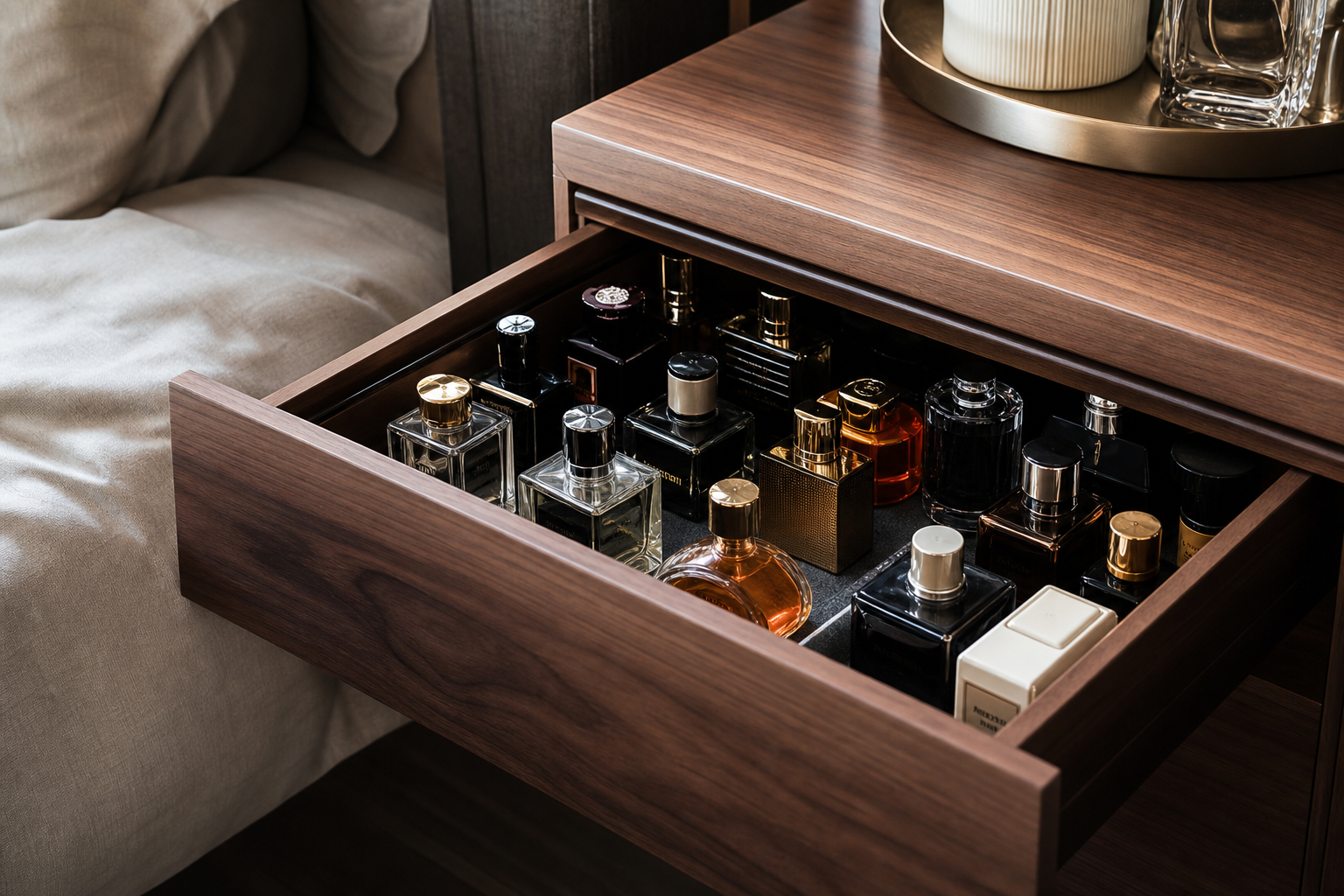
Storage is the single biggest variable in a fragrance's lifespan. The same bottle can last two years or twenty depending on where it lives.
Keep It Cool and Dark
The ideal storage temperature is somewhere between 12°C and 20°C, stable, away from heat sources and direct light. A bedroom drawer or a closed cabinet works well. A dresser surface near a window does not. Sunlight and heat break down fragrance molecules, rendering the fragrance less potent over time. The original box a fragrance comes in is one of the best and most overlooked storage tools. It blocks light and insulates against temperature swings.
One thing to avoid: refrigerators. While the logic of cooling a fragrance makes sense, domestic fridges drop below 8°C, which can cause natural waxes and heavy resins to crystallize and settle out of solution as a permanent cloudy residue. The humidity inside a fridge also damages labels and can corrode atomizer sprayers over time.
Avoid the Bathroom
Bathrooms have fluctuating temperature and humidity, which are among the worst conditions for fragrance stability. Every hot shower drives a spike in both heat and humidity, then the room cools. That cycle stresses the molecular structure of any fragrance stored there, and humidity can trigger hydrolysis, where water molecules break down fragrance compounds directly.
Seal It and Don't Shake It
Keep caps tightly closed after every use. Air exposure is cumulative. The longer a bottle sits open between sprays, the faster the top notes drift. Don't shake the bottle either. Shaking introduces oxygen bubbles into the liquid, which accelerates oxidation. It doesn't blend the essence or "activate" the fragrance. It just adds air.
Transfer Small Quantities When the Bottle Gets Low
As the liquid level drops, the headspace inside the bottle grows and oxidation accelerates. One usable fix is to transfer the remaining fragrance into a smaller, dark glass container, keeping it in its original container type where possible. This reduces the air-to-liquid ratio and slows the degradation cycle. Use a clean pipette and work quickly to limit unnecessary exposure.
If you're buying fragrances from Essenze Studio's online perfume shop, the 10ml spray and 3ml vajore trial sizes are genuinely useful here beyond just testing. A smaller container means you're always working from a bottle that isn't accumulating a large headspace, and you can finish it before significant oxidation sets in.
FAQ
How can I tell if my perfume has expired?
Check for three things: a metallic, sour, or vinegary smell on the first spray; noticeable darkening or cloudiness in the liquid; and visible sediment or particles in the bottle. If two of those three are present, the fragrance has likely degraded beyond its best. A slight color shift in vanillin-heavy formulas can be normal, but combine that with a scent change and you have a clear answer.
Can I still use expired perfume?
If the scent has only faded slightly with no color change or sediment, it's generally safe to use on fabric. Using expired perfume on skin isn't recommended because oxidized molecules can act as sensitizers and cause irritation or contact dermatitis, especially for sensitive skin. When in doubt, spray it on fabric or use it as a room scent rather than wearing it directly.
Does unopened perfume expire?
Yes, though more slowly. An unopened bottle typically stays stable for three to five years, sometimes longer if the formulation is base-heavy and the packaging is airtight. Chemical degradation still happens even without air exposure, because heat and light can drive photolysis and slow thermal reactions through the glass. Storing an unopened bottle well can push that window significantly.
What perfume formats last the longest?
Higher-concentration formats hold up better over time. Extraits de Parfum, especially those built on amber, musk, or woody base notes, are the most stable. Alcohol-free oil perfumes also hold well because the aromatic compounds are bound differently and don't rely on an alcohol carrier that evaporates. Light Eau de Cologne and citrus-forward EDTs are the least stable and should be used within one to two years of opening.
Does the bottle size affect how quickly perfume expires?
Yes. As you use a fragrance, the empty space (headspace) inside the bottle grows, and that extra air speeds up oxidation. A bottle that's half empty will degrade faster than one that's nearly full. Smaller bottles, like the 10ml spray or 3ml vajore sizes from Essenze Studio Parfumeri, help because you're more likely to finish them before significant oxidation sets in.
Is there a way to check a perfume's production date?
Most fragrance bottles don't print an expiry date directly on the label, but many carry a batch code that can be checked through online databases like CheckFresh or CheckCosmetic, which cross-reference manufacturing dates. You can also look for the PAO symbol, the small open jar with a number like 24M or 36M, which tells you how many months the fragrance is considered stable after first opening.
Conclusion
Perfume does expire, but storage and formulation make the difference between a bottle that fades in a year and one that holds for a decade. Keep fragrances cool, sealed, and away from light, and pay attention to the first spray every time you open an old bottle. If you want a scent that's built to last from the start, the 40% essence concentration and inspired luxury fragrance formats at Essenze Studio Parfumeri give you a real advantage. Try a 10ml spray or a 3ml vajore before committing to a full size.